Thursday, 26 June 2014

Chough, Small Blues & Machair

Some shots from my Bumblebee Survey transect at Aillebrack last Sunday. Nice to see a few Small Blues out on the commonage. This small area is the only location that I know of where the species occurs in Connemara. A few hoverflies around also. I don't have my hoverfly book to hand so I'll have to add names to a few later. The meadows and machair commonages are looking fantastic at the moment. The commonage here is grazed only by a small herd of cattle. The difference between this and sheep only commonage is stark. Sheep are generally bad news for most habitats in the West of Ireland.

Male on the right hand side, larger body and bill size.


Small Blue butterflies mating.

Small Blue butterfly

Small Blue butterfly

Sawfly species

Arctophila superbiens

Volucella bombylans
 
Eristalinus sepulchrais


Red-tailed Bumblebee, not much of the wings left.
 
Greater Butterfly Orchid

Honeysuckle

Meadow

Meadow with Ballyconneely Golf Course in the background.
Cattle grazed machair commonage at Aillebrack.
 

Tuesday, 24 June 2014

Kestrels 2014

We're all finished up with the raptor ringing season as of last Friday 20th June. It's been a generally poor year all round for birds of prey species here in West Galway.

The pairs that were successful produced good clutch sizes and fledged chicks in good numbers so it doesn't look like food was an issue. However of the 19 sites that I checked here;
  • eight were outright failures/didn't attempt breeding at the locations,
  • two contained predated eggs (Hooded Crows & large gull mostly likely predators) and
  • nine managed to successfully fledge chicks.
The most likely culprit for the poor breeding season was possibly the extremely heavy rainfall in mid May, I believe Saturday 17th May was particularly bad with one rain downpour that lasted for most of the day. It's not only Kestrels that suffered from this as Peregrines were possibly affected to a greater degree in Connacht.
 
John Lusby of Birdwatch Ireland and I only managed to ring four broods of chicks this year and each brood contained five chicks. We were too early for one brood and too late for another. The winter storms have had an effect on some of the nest sites as the ledges of three pairs have been washed away unfortunately.

Clutch of five.


Chick in the onion patch with its new bling.

 
Five chicks crammed in here.

An older chick compared to the previous birds.
 
John collecting chicks from nest. They often use ivy covered ledges and holes to conceal the nest.


Searching for an active nest. Ran out of time but came back a week later and the chicks were on the wing so we would have been too late anyway. These were one of the earliest pairs I've had here.

Processing a chick.

Predated eggs.


Saturday, 21 June 2014

Bog-trotting June 2014

A few pictures from the Connemara Bog Complex SPA & SAC. I've been spending a fair amount of time out on the bog and this summer between the on-going Golden Plover and Merlin surveys  Some great views of a young Irish Hare leveret who wasn't very put out by my presence on one of the days. Viviparous Lizards are quite common throughout Connemara and are out only native reptile. Also the ground beetle Carabus clatratus which is another species that is restricted to larger areas of untouched blanket bog.


Saturday, 14 June 2014

Inishbofin & Inishark May 2014

A few pictures from the adjacent islands of Inishbofin and Inishark from last month. I was giving a talk out on Inishbofin and had some views of one showy Corncrake up at the West end. Light was a little too strong and was at the wrong angle. It's looking there are at least a dozen singing males again on the island and I wouldn't be surprised if there a few more before the official counts are finished. I was out with the Living the Wildlife crew who are filming Great Skuas on Inishark also. Looking forward to seeing the finished product on the telly which will probably be next year. The skuas hadn't hatched up until last week. Numbers appear to be increasing from a very low starting point for the last ten years or more since they established themselves on the West coast of Ireland. I had a surprise of a Turtle Dove with around five Collared Doves as I leaving Inishark. There have been two Corncrakes on Inishark this summer from the nettle patches around the deserted houses. Unfortunately the Corncrakes don't have anywhere else to go on the island as there are no fences on the entire island and sheep have the whole place grazed to the ground, a common issue on a lot of offshore islands in recent summers. Inishark was alive with Wheatears the last day as the first broods of the year had just left the nests. I hope to get out to Inishark again shortly for a longer stay fingers crossed. I've only ever at most spent a few hours on the island before and you always find yourself running around like a headless chicken before you have to leave again. Things have been a little hectic for the last two months between ringing Ravens, Peregrines and Kestrels. We've also into our second year of surveying Golden Plovers on the Connemara Bog Special Protection Area. Merlins are again to the forefront at the moment. They are always later in their pregress compared to the other two falcons. I've found active pairs so far this summer. I'll post a few pictures on all these at some stage.

Corncrake

Male Reed Bunting

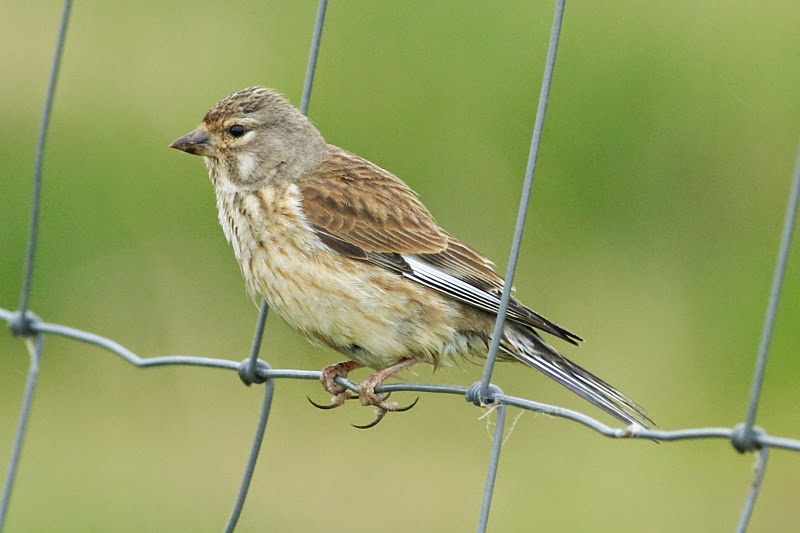
Female Linnet

Hooded Crow

Adult Meadow Pipit

Juvenile Meadow Pipit

Juvenile Robin

Sedge Warbler collecting nest material.

Sedge Warbler

Dunnock

Turtle Dove

Turtle Dove with Collared Doves

Family of Wheatears

Juvenile Wheatear

Juvenile Wheatear

Male Wheatear
Male Wheatear

Female Wheatear

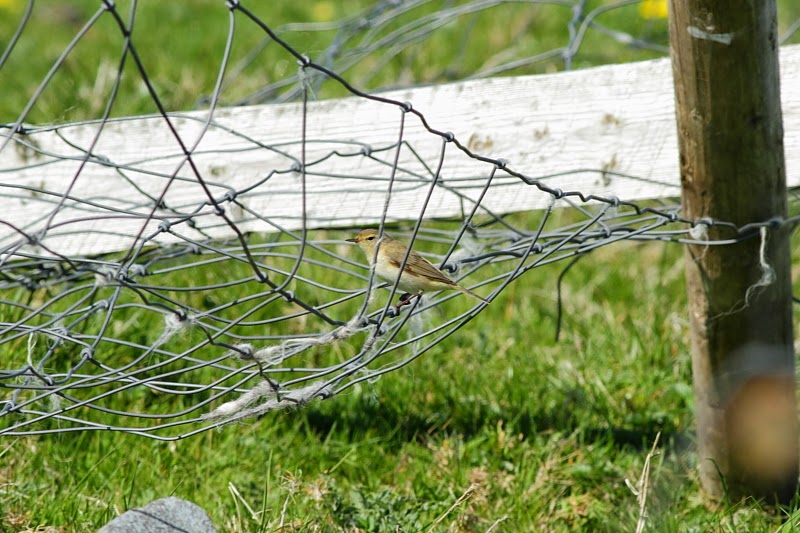
Migrant Willow Warbler
Rabbit
Getting set up in the hide for the Great Skuas.