Showing posts with label semipalmated plover. Show all posts

Monday, 10 October 2016

Achill Semipalmated Plover

I took a trip up to Achill Island yesterday to have a look at the Semipalmated Plover and to see if there was much else around just to take a break from birding in Galway for a day. I met Pat Lonergan and Micheal O'Briain who were already on site and who had the bird in a flock of a hundred or so Ringed Plovers at the stream outflow from the golf course. This bird had been found by Tim Jones the previous Sunday. The birds were quite skittish unsurprisingly but I managed to get reasonably close using the "belt buckle" approach, not easy over cobble stones! As usual it remained overcast and cloudy the whole time unfortunately. I didn't manage to get any shots of the feet due to the low angle of shooting.
While it certainly was smaller than the adjacent Ringed Plovers it didn't seem as small as the Galway bird. I also never heard it calling in the two hours or so of observation.

As I was finishing up a flock of eleven Pink-footed Geese flew in from the west and eventually landed in fields between the beach and Sruhillbeg Lough (photos to follow). Micheal had a single bird the previous day on Sruhill Lough. Also on Sruhillbeg Lough was a female Garganey that Micheal had found the previous day. Most likely a first for Achill, can't be many county Mayo records for that matter. I checked a few of the gardens west of Keel afterwards with Micheal but I was a little surprised not to see a single warbler in any of them. I've just seen that Micheal had a Yellow-browed Warbler in one of these garden this morning. There can't be many spots along the headlands and islands of Ireland that don't have at least one Yellow-browed Warbler. Fingers crossed they'll bring a few of their Siberian friends with them. I had five birds around the Ballyconneely/Slyne Head area on Saturday, four on Inishbofin the same day and at least ten on Inishmore yesterday. The numbers seem to increase with every passing year.



Thursday, 6 October 2016

SEMIPALMATED PLOVER

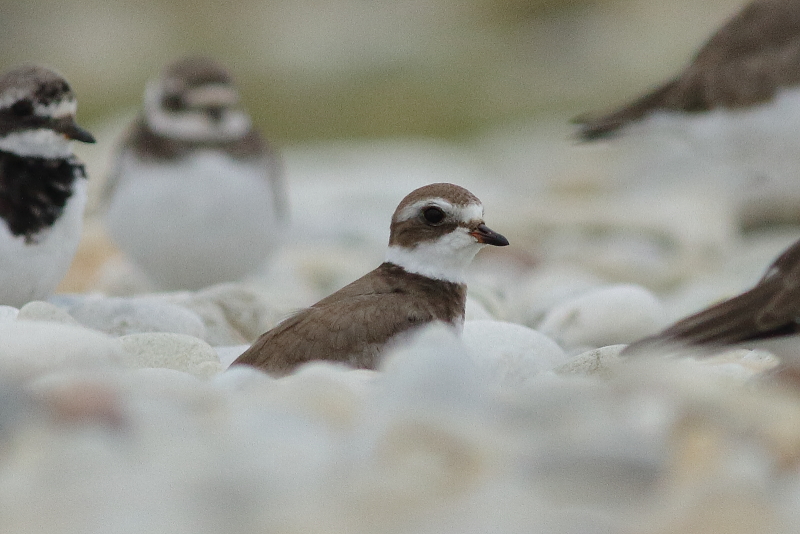
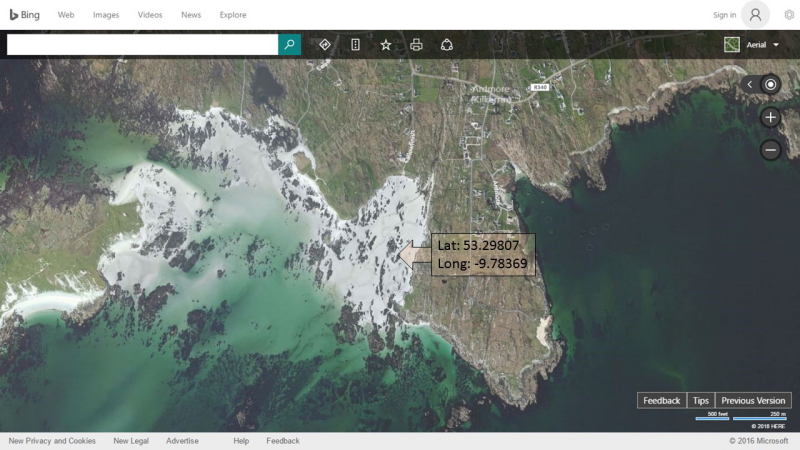
Bit of an unexpected surprise today down on Ardmore Strand near Carna this afternoon in the form of what should be Ireland's sixth Semipalmated Plover if accepted! This is another site that I've never had any wader of note up until today, not even a Curlew Sand or Little Stint. There were about a hundred Ringed Plover present with slightly less Sanderling and just two Dunlin. I was initially struck by the size of the bird, it really was tiny compared to the Ringed Plover. The conditions weren't great for photos with overcast skies the whole time. The plover flock wouldn't allow close approach so all of the shots below are just heavily cropped record shots. Hopefully it will still be around tomorrow and I might be able to get better shots. Thankfully it was heard calling early on in the encounter giving the typical Semi-p Plover flight call e.g. http://www.xeno-canto.org/277111
It was really eye-catchingly small compared to the Ringed Plover even more so than apparent Arctic breeding Ringed Plovers. The head shape looked more rounded at times however the bill wasn't particularly chunky which I usually associate with Semi-p. It could also look rather slim at times. The upperparts with a little darker than most juvenile Ringed Plover and the white underparts almost struck me as being whiter for some reason? The breast band very thin but complete along the centre which gave a characteristic look. This along with the size make it very distinct when face on. The supercillium wasn't as obvious compared to most Ringed Plovers of the same age. A yellow orbital ring was noted at close quarters especially on the lower half of the eye. It was partially lost against the pale supercillium on the upper half. One of the most important features obviously was the loral pattern which was much thinner with the base of the lower and upper mandibles highlighted by white featuring here. It was nearly impossible to make out the webbing/palmations between the outer and middle toes and more importantly between the inner and middle toes in the field but you can just about make this out in some of the record shots below. Have a look at this "Scary Plover" post by Dani Lopez Velasco on Birding Frointiers here http://birdingfrontiers.com/2012/07/23/scary-plover/
Semipalmated Plover is a species that a lot of us have been keeping an eye out for a long time now.

Up to the end of 2015 there have only been two accepted Irish records of this species. However this year there's been a first-summer at Tacumshin, Co. Wexford in May/June and an adult male also there on 26th July and only just last weekend there was a juvenile up on Achill Island, Co. Mayo. Four in a year is a bit unexpected but as they are quite a difficult bird to clinch I'm sure a lot more go unnoticed. There are only four UK records to date so we've managed to out do them in the Semi-p Plover stakes, there aren't many species that you can say the same about.

Semi-p on the left with a juvenile Ringed Plover.

Add caption


Showing a hint of the palmations.

You can just about see the webbing between the outer and middle toe on the left foot.

Dito for the right foot.


Juvenile Ringed Plover on the left with the juvenile Semipalmated Plover, note the size difference!

Saturday, 15 December 2012

Florida 14th November 2012

Birded all day around the coastal area of Fort Myers. One of the better days of the trip mainly down to the selection and close views of waders.
First spot was the Little Estero Lagoon, an area of mostly sandy beach with alot of people searching for seashells and walkers. The birds were well used to all this activity which meant great views of most of the stuff. There's a small lagoon just in behind the beach but it was fairly quiet in there.
Tried the famous J.N. Ding Darling National Wildlife Refuge on Sanibel Island later. The visitor centre here is well worth a visit. It was probably the best VC I came across in my fortnight in Florida. There a big collection of wood carvings housed here mostly wildfowl and all by Jim Sprankle. The Harlequin, Bufflehead and Hooded Merganser cravings were unreal. The level of detail was just amazing possibly better than the real thing. The refuge is accessed by a four mile long one way wildlife drive. The main target here for me was Yellow-crowned Night Heron, one of the few heron/egret species that I hadn't seen up until this point. This is supposed to be a regular spot for them but even after driving the trail on two occasions I couldn't find any. The tide seemed to very high at the time despite the guides telling me that it was low tide at the time. There were small numbers of pelicans and a max of 200 waders present but certainly not the chockablock conditions that I had been led to believe from the literature on the site.
A far better and smaller site was Bunche Beach. Good numbers of waders were found on the righthand side. A Long-billed Curlew has wintered here for a few years and is a very scarce bird in Florida. I managed to pick it up way in the distance roosting with other waders across a impassable channel. Thankfully after a time the tide dropped somewhat and most of the waders came to me including the curlew. Amongst the 3 or 4 Piping Plover here I photographed a colour ringed bird. I managed to find out later that it had been ringed as chick this summer gone up in Sleeping Bear Dunes National Lakeshore in Michigan a good 2000 kilometres to the North. There's supposed to be less than 100 pairs breeding in Great Lakes area. Globally there are only 6000 pairs.


Adult American Oystercatcher

First-winter American Oystercatcher
Piping Plover, possibly of the melodus Atlantic coast breeding race.
First-winter Piping Plover
First-winter Piping Plover of the circumcinctus race, much paler.

Colour ring Piping Plover's journey.

Snowy Plover

Snowy Plover

Semiplamated Plover
Grey Plover

Least Sandpiper

Western Sandpiper (short-billed individual)

Western Sandpiper (long billed individual)

Short-billed Dowitcher

Western Willet
Marbled Godwit

Marbled Godwit

Long-billed Curlew

Long-billed Curlew
First-winter Ring-billed Gull

Cabot's Tern

Cabot's Terns

First-winter Royal Tern

American White Pelican, the original "Snow-bird" according to a passing guide on a tour bus.

Double-crested Cormorant, American White Pelican & Roseate Spoonbill.

Reddish Egret

Reddish Egret

Little Blue Heron

Great Blue Heron

Snowy Egret

Pileated Woodpecker